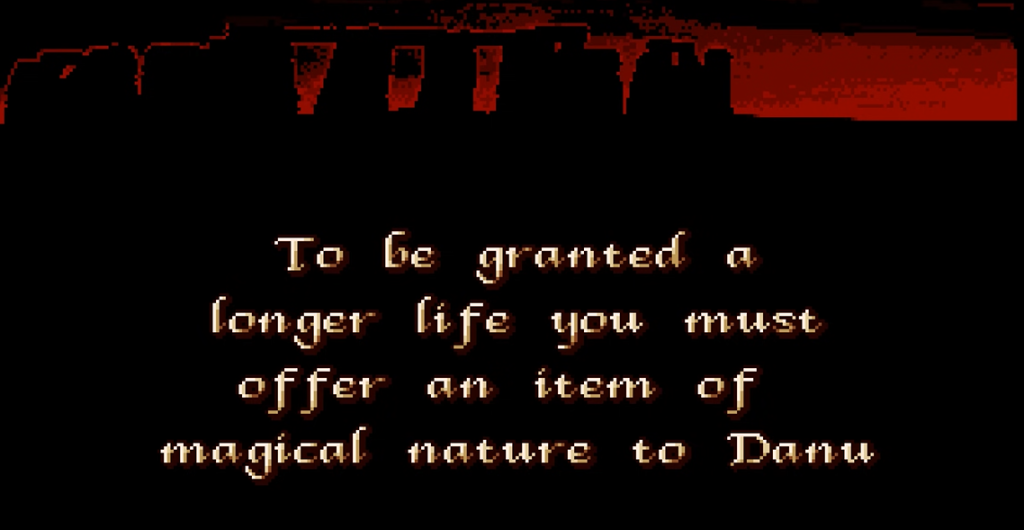
Moonstone’s Loading Screens: A Lost Art
In an age of high speed SSDs, the humble loading screen is pretty much a relic of a forgotten computing age.
Still, modern gamers tend to think of any kind of intermission between gameplay as an inconvenience.
A spinning icon signals a chance to glance at their smartphone while the next level loads.
Back in 1991, however, things were different.
Games loaded from floppy disks (or early era hard drives if your family was rich!), often one battle or location at a time. Waiting wasn’t optional and every developer had to find a way of occupying players while the next section of the game was transferred from disk into memory.
Most titles simply displayed a logo, a title screen, or a generic loading message.
Moonstone did something much more interesting.
It transformed its loading screens into part of the adventure.

More Than A Technical Necessity
Today it’s easy to forget just how common loading screens were in the early 1990s.
On the original Amiga, loading a lair, village, encounter or major event could take time. Rather than treating those moments as dead space, Moonstone used them to deepen the world and build atmosphere.
Each loading screen featured:
- A distinctive silhouette backdrop
- A haunting colour palette
- A carefully chosen snippet of text
- Richard Joseph’s unforgettable score – more of a funeral dirge for these screens!
Together these ingredients achieved something remarkable.
The game wasn’t simply loading.
It was preparing you. (Or unnerving you depending on your interpretation!)
Building A Mythology
One of the most striking things about Moonstone’s loading screens is how mythological they feel.
Consider:
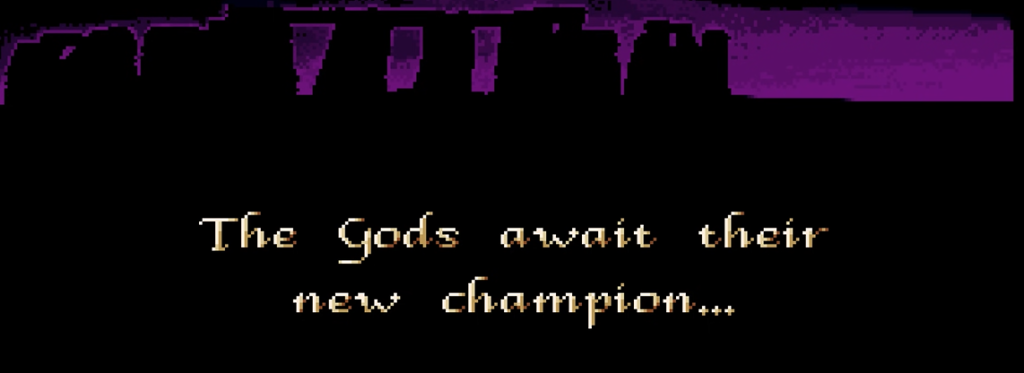
“The Gods await their new champion…”
Or:
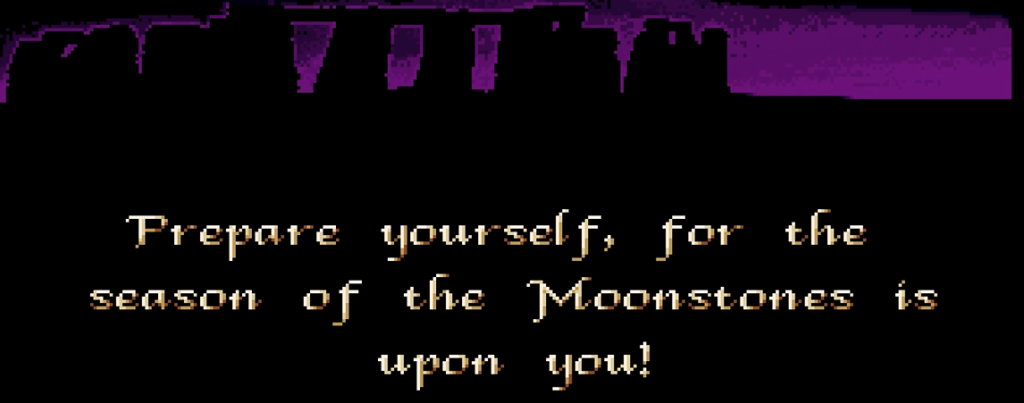
“Prepare yourself, for the season of the Moonstones is upon you!”
These aren’t gameplay instructions.
They’re pieces of folklore.
Moonstone constantly hints that greater forces are at work behind the scenes. Gods watch from afar. Fate influences events. Ancient powers shape the world.
Remarkably, the game rarely explains any of this.
Who are these Gods?
Why do they care?
What exactly is the significance of the Moonstone itself?
Moonstone never really tells you.
Instead, it trusts your imagination.
And that’s precisely why the world feels so mysterious.
Teaching Through Lore
Perhaps the cleverest aspect of the loading screens is that many of them communicate important gameplay information without ever feeling like tutorials.
For example:
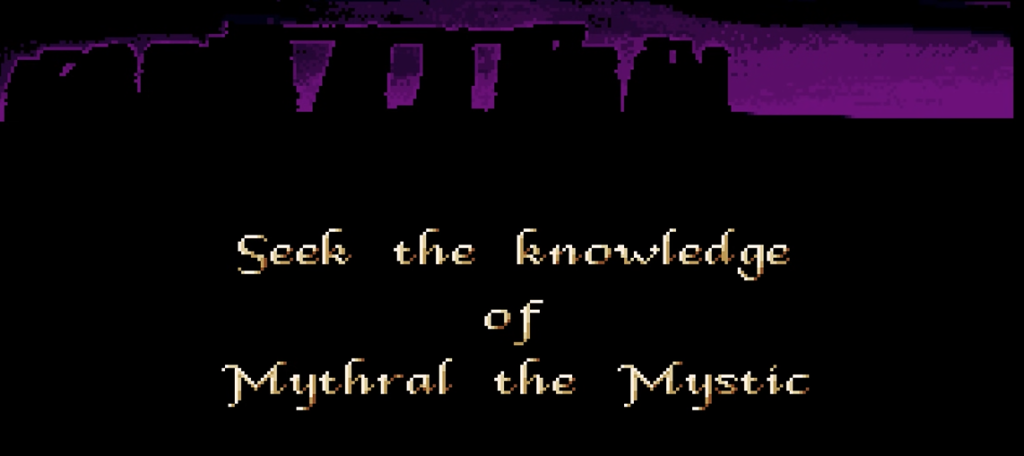
“Visit your home village to restore lost lives.”
“Seek the wisdom of Math the wizard to aid you in your quest.”
“Seek the knowledge of Mythral the Mystic.”
These screens quietly educate the player while remaining firmly rooted in the game’s world.
Modern games often deliver information through objective markers, pop-up windows or lengthy tutorials.
Moonstone preferred whispers.
Characters such as Math and Mythral aren’t introduced through cut-scenes.
They’re introduced through intrigue.
A single sentence is often enough to make the world feel larger.
If you’re looking for a modern contemporary that gets this like Moonstone did, think Dark Souls… or indeed any From Software game.
They treat players like adults, not idiots.
A Living World
Some loading screens hint at systems and ideas that were astonishingly ambitious for the time.
One of my favourites is:
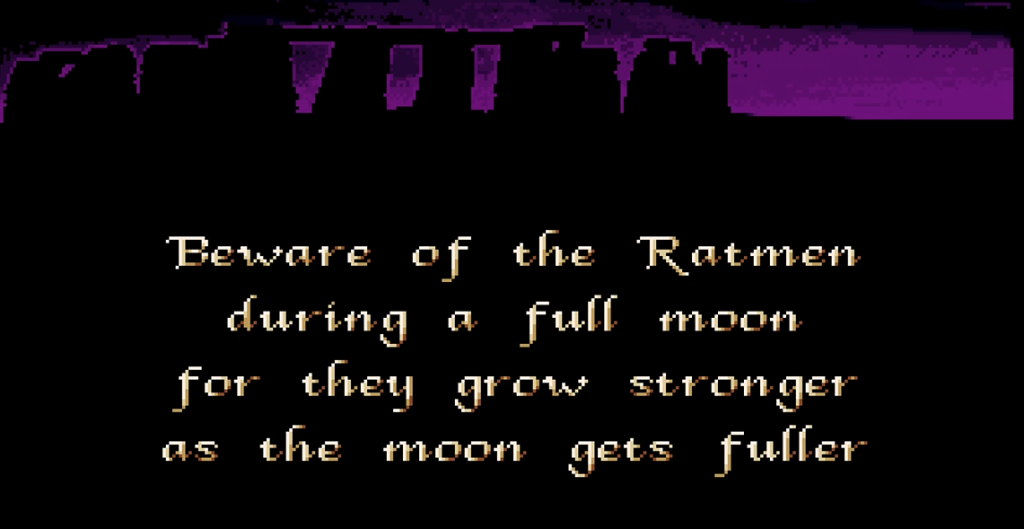
“Beware of the Ratmen during a full moon, for they grow stronger as the moon gets fuller.”
Looking back today, this is fascinating.
Not only is the game teaching the player about monsters, it’s also suggesting that the world itself changes independently of the player.
The moon matters.
The creatures react to it.
The world is alive.
Whether every one of these ambitions was fully realised in the final game is almost beside the point.
The important thing is that Moonstone constantly implied that its world was bigger than the player.
And that’s one of the reasons it still feels special today.
Fear Works Better Than Tutorials
If Moonstone’s loading screens have a secret weapon, it’s fear.
Take these examples:
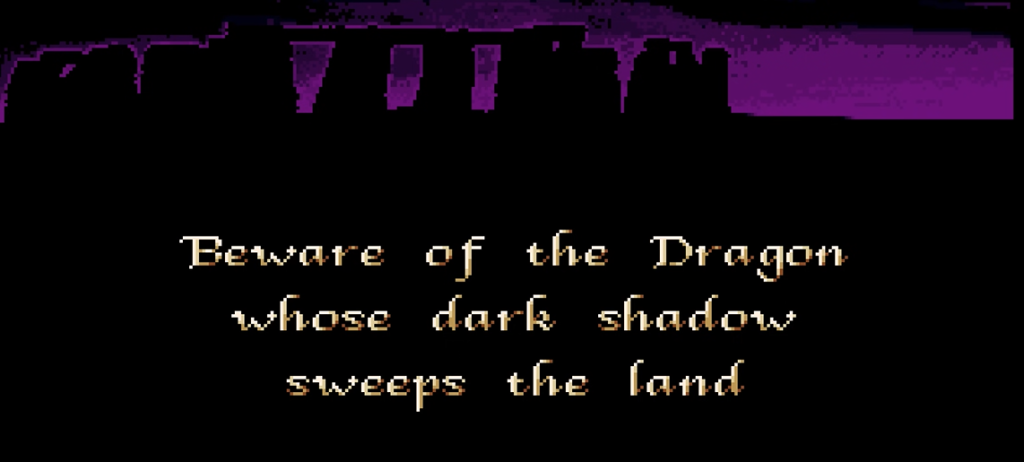
“Beware of the dreaded Black Knights.”
“Beware of the Dragon whose dark shadow sweeps the land.”
“Beware of the fierce Baloks of the Northern Wastelands.”
These messages aren’t explaining mechanics.
They’re creating anticipation.
The screen fades in.
Richard Joseph’s music begins.
A warning appears.
And suddenly the player has thirty or forty seconds to think about what might be waiting on the other side of the loading process.
Ironic when some of the fights (Mudman!) can be over in seconds.
The game is frightening you before combat has even begun.
That’s brilliant design.
Richard Joseph’s Contribution
It’s impossible to discuss Moonstone’s loading screens without mentioning Richard Joseph.
The text and imagery are excellent on their own, but the music elevates them into something genuinely memorable.
The loading screens don’t provide relief between encounters.
They increase tension.
Questions start forming:
- Am I prepared?
- Have I made a mistake?
- OMG it’s the Dragon; I’m dead(!)
The player begins generating their own fears; hands shake, palms begin to sweat.
And that’s often more powerful than anything a game can show directly.
Anticipation Was Gameplay
Looking back from 2026, I think Moonstone accidentally stumbled onto an idea many modern games still struggle to understand:
Anticipation is gameplay.
The loading screens weren’t separate from the adventure.
They were part of it.
They:
- Built tension
- Expanded the mythology
- Introduced characters
- Foreshadowed encounters
- Explained systems
- Encouraged imagination
All while a floppy disk was busy doing its thing in the background.
That’s an awesome achievement.
The Secret Storytellers of Moonstone
Today we often praise games for their environmental storytelling, world-building and subtle lore.
Moonstone was quietly doing many of those things over thirty-five years ago.
Its loading screens may have existed because technology demanded them.
But they succeeded because they respected the player’s imagination.
They didn’t explain.
They suggested.
They didn’t lecture.
They hinted.
And somehow, all these years later, many Moonstone fans still remember them.
That tells you everything you need to know.