Moonstone: Videogame or Board Game?
Ask most people to describe Moonstone: A Hard Days Knight and they’ll probably call it an action RPG.
They’re not entirely wrong.
The game contains gold, weapons, armour monsters, cities, experience points, quests… all the classic ingredients are there.
Yet after more than two decades of chatting with Moonstone creator Rob Anderson, it’s clear the game’s true roots lie somewhere else entirely.
Moonstone isn’t really an RPG in the videogaming sense.
At its heart, it’s a fantasy board game brought to life through a videogame.
Everyone Remembers The Combat
Mention Moonstone to most players and they’ll immediately recall:
- Dragons
- Mudmen
- Baloks
- Black Knights
- Decapitations
- Richard Joseph’s soundtrack
And rightly so.
Moonstone’s combat remains one of the most distinctive and memorable systems seen on the Amiga.
But that’s (literally) only half the game.
The other half is what happens between the battles.
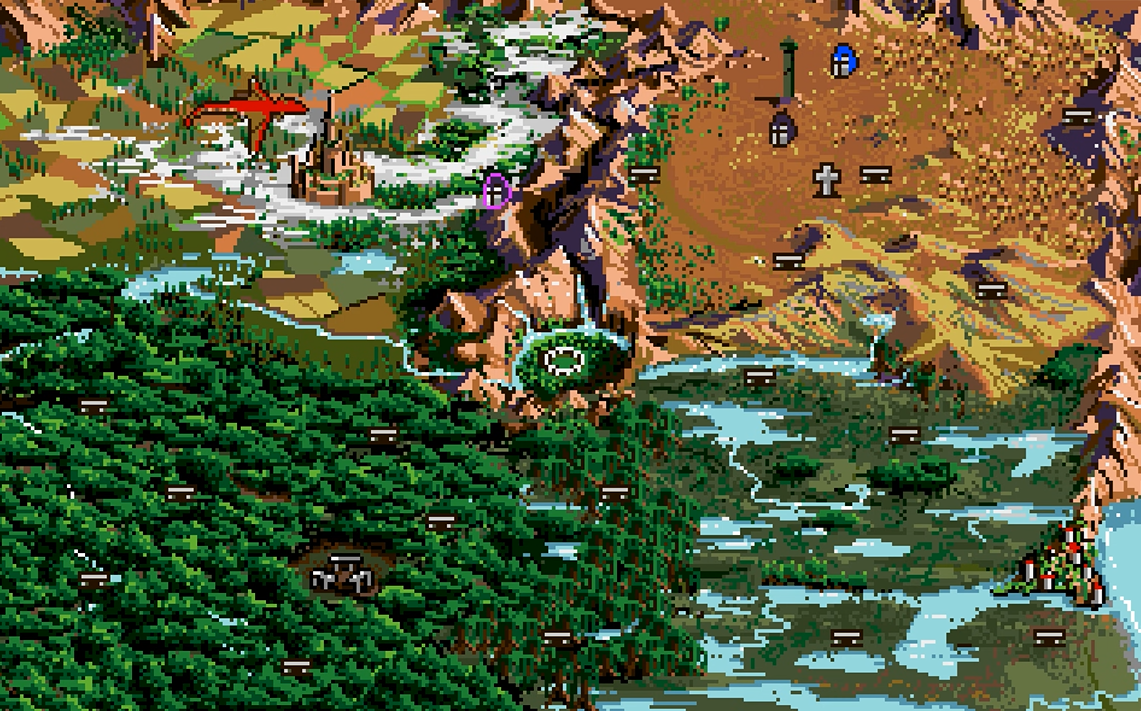
The Map Screen
Before every duel.
Before every Dragon encounter.
Before every Mudman ambush.
Players spent their time on the world map.
Travelling, planning, exploring, making decisions, taking risks, competing.
Moonstone constantly asks:
“What will you do next?”
rather than simply:
“How will you fight?”
And that’s where its tabletop roots begin to reveal themselves.
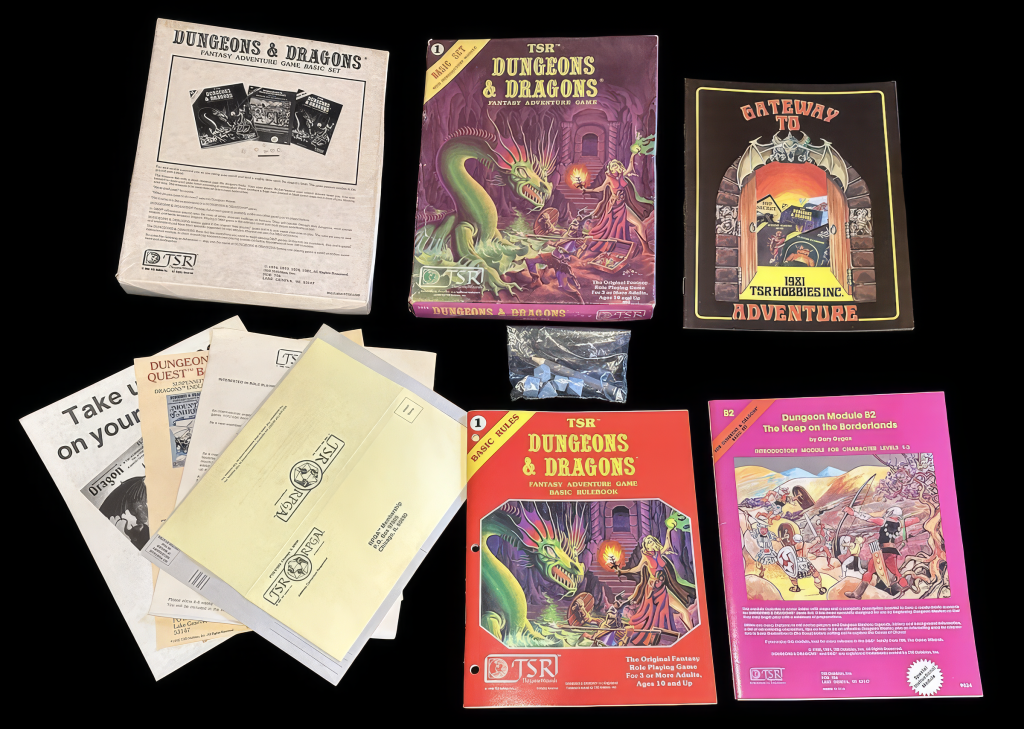
Dungeons & Dragons: The Dungeon Master
When discussing Moonstone’s influences, most people focus on the obvious board-game inspirations.
Yet Dungeons & Dragons may actually be the most important influence of all.
Both Rob and Todd Prescott repeatedly cite Dungeons & Dragons as a major foundation behind Moonstone’s design.
D&D contributed:
- Monsters
- Magic items
- Exploration
- Fantasy world-building
- The idea of player-driven adventures
But perhaps more importantly, it contributed the feeling that the world exists independently of the player.
Many of Moonstone’s systems feel as though a dungeon master is quietly manipulating events behind the scenes.
The player is constantly confronted with choices:
- Do I risk another lair?
- Should I challenge the Dragon?
- Should I trust this knight?
- Should I return home?
- Should I venture into the Wastelands?
Moonstone doesn’t force a path.
It presents opportunities.
And then it lets players create their own stories.
That is pure emergent tabletop design.
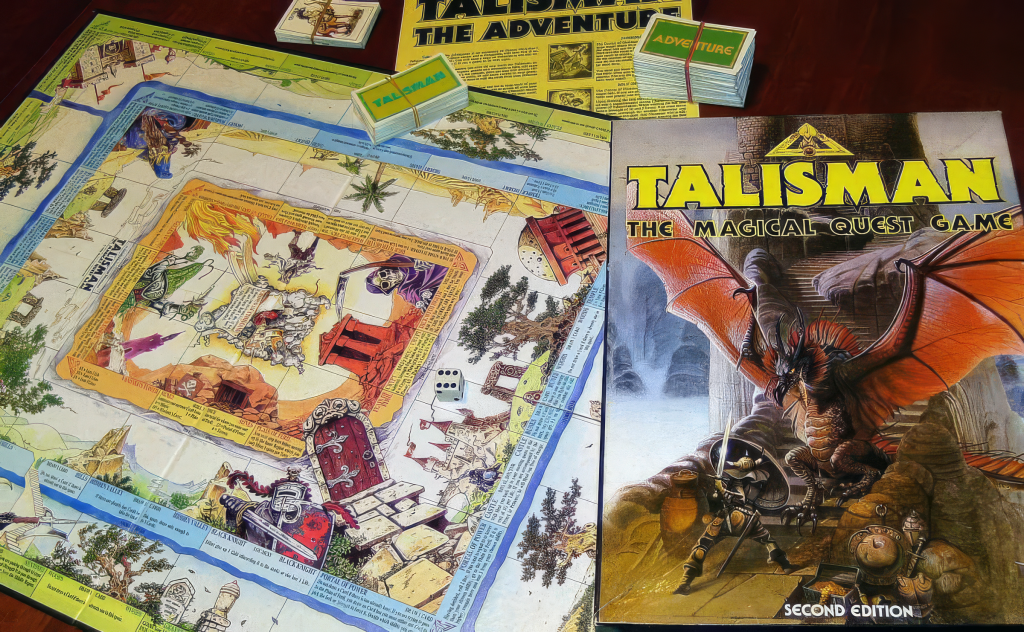
Talisman: The Journey Is The Game
Of all Moonstone’s inspirations, Talisman may be the easiest to recognise once you know where to look.
According to both creators, Games Workshop’s classic fantasy board game played a significant role in shaping Moonstone’s structure.
The similarities are remarkable.
In Talisman, players:
- Travel around a fantasy world
- Collect equipment
- Encounter monsters
- Increase their abilities
- Search for special objects
- Prepare for a final journey towards the centre of the board
Moonstone players do almost exactly the same thing.
The objective isn’t simply combat; the objective is preparation.
The journey itself becomes the game.
That design philosophy sits at the heart of Moonstone.
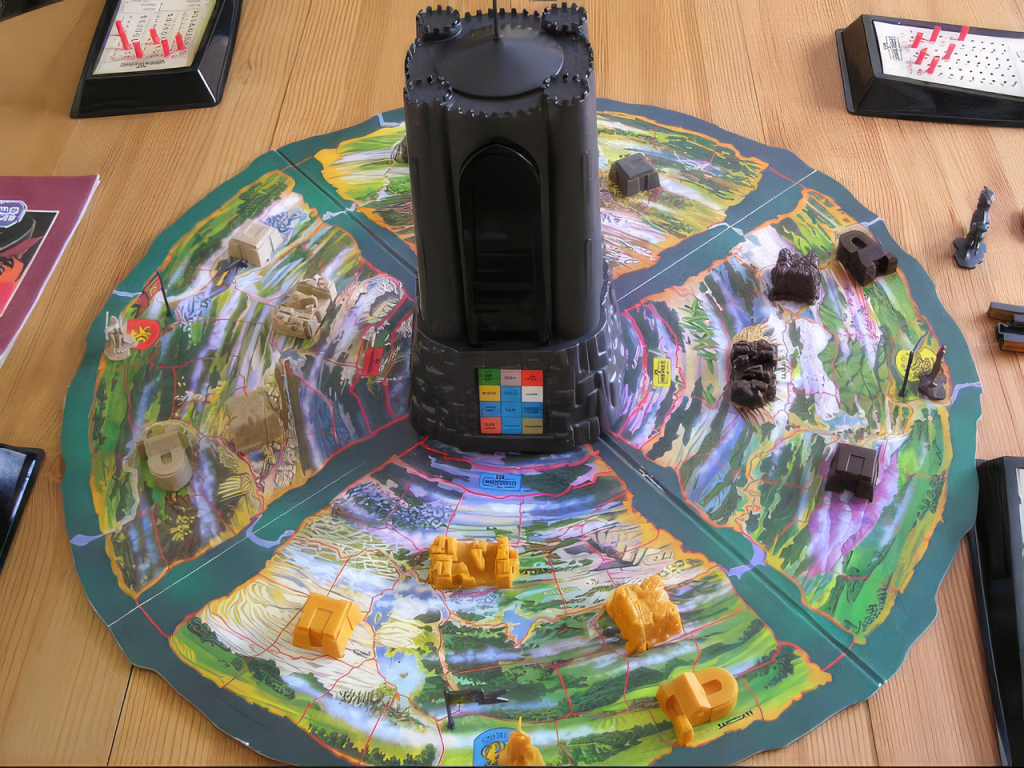
Dark Tower: The Missing Link
If Talisman explains Moonstone’s structure, Dark Tower provides its soul.
This is perhaps the most fascinating influence because relatively few modern players know the game.
Yet Todd Prescott directly identified Dark Tower as a major influence and even described it as being near-identical to Moonstone in several respects. (It is!)
Looking at Dark Tower’s design today, the similarities are extraordinary.
Players:
- Move through kingdoms
- Gather resources
- Build strength
- Collect keys
- Return to the centre of the board
- Confront a final challenge
That should sound very familiar to Moonstone fans.
Dark Tower almost feels like a tabletop blueprint for Moonstone’s world map.
The World Map Is Not A Map
This is the critical insight.
Most people view Moonstone’s world screen as a videogame map.
But it behaves much more like a game board.
The player:
- Takes turns
- Chooses destinations
- Manages resources
- Evaluates risks
- Competes against rivals
The map is not simply connecting battles; rather, it’s the lifeblood of the game.
Combat is the dramatic consequence of decisions made on the strategic layer.
The board-game layer is what gives Moonstone its enduring uniqueness.
Every Game Creates A Story
This may be Moonstone’s most important inheritance from tabletop gaming.
Players rarely remember:
“I gained two points of Constitution.”
Instead they remember:
“The Dragon ate me.”
“A Mudman dragged me underground.”
“I finally found the Moonstone and another knight stole it.”
“My back-stabbing mate stole my sword of sharpness, the twat.”
Those aren’t scripted stories.
They’re emergent stories.
The best board games create these memorable moments through systems and player decisions.
Moonstone does exactly the same thing.
Why Nobody Has Quite Recreated It
Looking back today, I reckon lots of admiring developers pinched the wrong parts of Moonstone.
They copied:
- The gore
- The monsters
- The violence
- The fantasy setting
But the real magic was hiding underneath.
The real magic was:
- The turns
- The map
- The planning
- The emergence of the dragon, mid-game
- The competition between knights, whether they were AI or human-controlled
- The resource management
- The stories
In other words, the board game roots.
Board Yet?
Perhaps the greatest misconception about Moonstone is that it’s an action RPG.
In reality, it feels more like three tabletop experiences fused together:
Dungeons & Dragons
For the world, monsters, atmosphere and emergent storytelling.
Talisman
For exploration, progression and the journey toward a central objective.
Dark Tower
For kingdoms, keys, a sprinkling of resource management, and the frantic race toward a final confrontation.
Wrapped around all of this was some of the most memorable combat seen on the Amiga.
The gore may be what most players remember.
The board game is what made Moonstone special.
And perhaps that’s why, more than thirty-five years later, it still feels unlike anything else.